


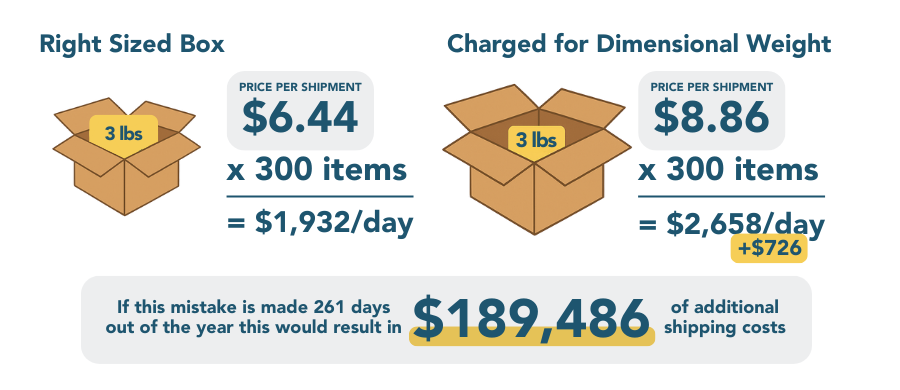
If you’re shipping products regularly, you’ve probably noticed that shipping charges don’t always make sense. A lightweight item in a large box can cost more than a heavier product in a tighter package. That’s because most carriers, including UPS and FedEx, now charge based on dimensional weight. Not just how much something weighs, but how much space it takes up.
This shift in pricing structure has led to unexpected costs, shipping audits, and frustrating chargebacks for many businesses. And when those costs hit over and over again, they eat into your margins fast.
That’s where a dimensional weight system comes in. By automatically measuring the size and weight of every shipment before it goes out the door, you can avoid surprises, reduce shipping errors, and start saving money right away. In this post, we’ll break down how dimensional weight pricing works, why it’s so easy to overspend on parcel shipping, and how the right system can help you take back control.
What Is Dimensional Weight? Why Does it Matter?
Dimensional weight, often shortened to “DIM weight,” is a way for parcel carriers to charge based on the space a package takes up, not just its physical weight. It’s especially relevant for items that are large but light, like pillows, plastic storage bins, or oversized packaging that leaves a lot of empty air inside.
Here’s how it works: carriers calculate the dimensional weight by multiplying the package’s length, width, and height, then dividing by a DIM factor (typically 139 for domestic UPS and FedEx shipments). Once DIM weight and actual weight have been calculated, you get charged the higher of the two.
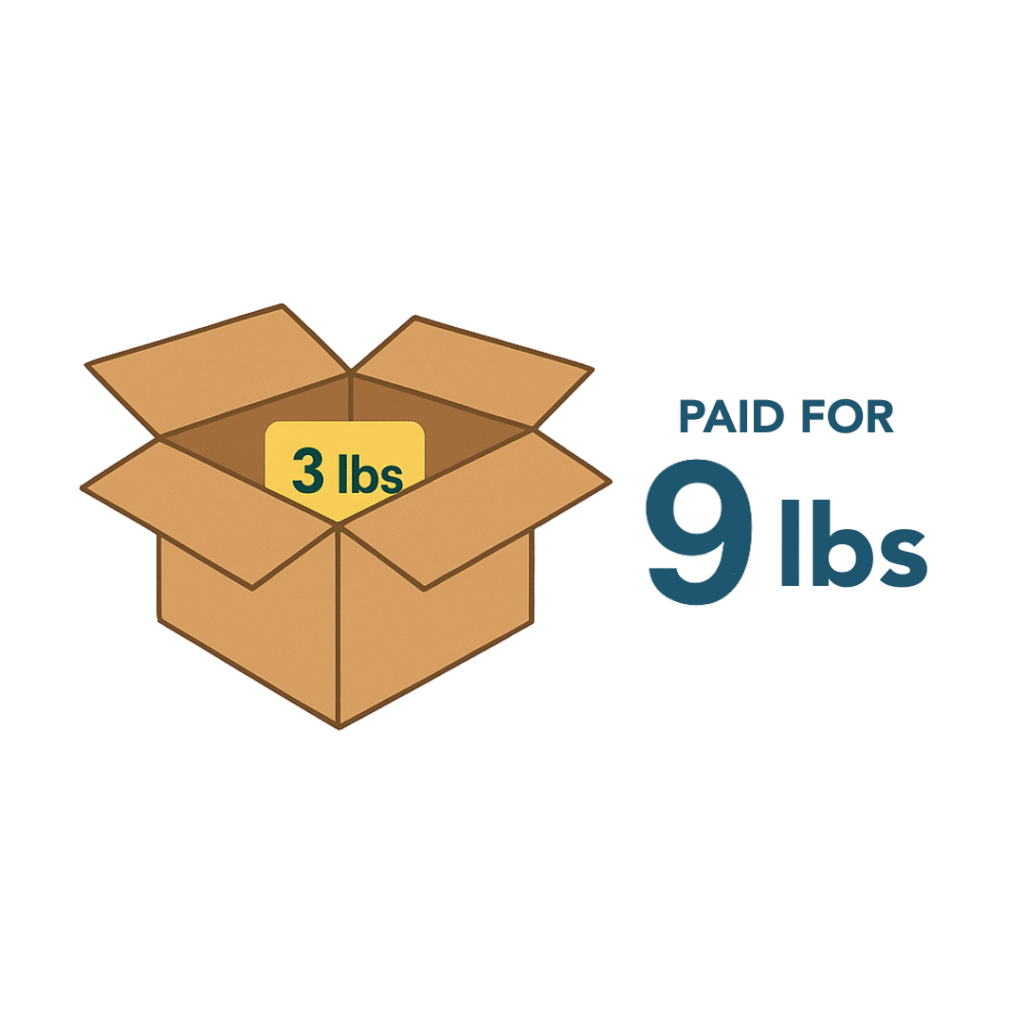
For example, imagine shipping a 3-pound item in a big box. If the box’s size pushes the dimensional weight up to 9 pounds, you’ll pay the shipping rate for 9 pounds, not 3. Do that a few hundred times a week, and the costs add up fast.
The tricky part? Most businesses don’t realize this is happening until the charges hit, if they realize it at all. That’s why it’s so important to capture accurate dimensions before the package goes out.
Common Reasons Companies Overpay on Shipping
Most parcel overspending comes down to one thing: bad data. Processes get rushed, production goals have to be met, and shortcuts get taken to get product out the door.
Here are a few common culprits:
- Guessing or rounding dimensions: Estimating box size instead of measuring it means you’re likely under-declaring, which leads to carrier adjustments and extra fees.
- Manual measuring mistakes: Using tape measures is time-consuming and often inaccurate, especially in warehouse environments with high turnover and lots of temp labor.
- Inefficient packaging choices: Packing small items in oversized boxes increases dimensional weight and shipping costs.
- No visibility before label creation: If you don’t know the true shipping specs before you generate a label, you’re flying blind and probably overspending.
- Carrier audits: Both UPS and FedEx audit shipments. If your declared dimensions are off, they’ll correct them and tack on a fee.
If you’re constantly trying to figure out why shipping costs seem higher than expected, chances are it’s one of these issues. The good news? They’re fixable with the right tools.
How a Dimensional Weight System Helps Cut Costs
A dimensional weight system automatically measures the size and weight of products, parcels, and pallets, feeding accurate data directly into your WMS, ERP, or shipping software. That means no more estimating, no more rounding, and no more surprises when the invoice shows up.
Instead of relying on manual measurements or vendor-provided dimensions, a dimensional weight system gives you actual dimensions in real time. That helps you select the right box, avoid overpaying on shipping, and ensure you’re reporting the correct information to your carriers.
It also reduces the chances of being flagged during a carrier audit. When UPS or FedEx checks your declared dimensions against their own scan data, you’ll be glad your numbers are accurate. And over time, that accuracy translates into significant savings, especially for companies that ship a high volume of bulky or irregularly shaped items.
Use Case Examples
Dimensional weight systems are becoming essential for operations that ship product on a regular basis. Here are a few real-world scenarios where businesses are using them to cut shipping costs:
E-commerce warehouses: Online retailers deal with a wide range of product sizes, often shipping small items in boxes that are way too big. With a dimensional weight system in place, they can right-size packaging and save on every shipment.
3PLs: Third-party logistics companies face constant pressure to keep costs down for their clients. Accurate dimensioning helps prevent reweighs and chargebacks, keeping those client relationships strong. It also means less overhead for the 3PL, so they can run lean and maximize profit and throughput.
Retail distribution centers: When products are shipped to stores on pallets, incorrect dimensions can lead to reclassification fees and wasted space on trucks. Dimensional weight systems help these teams load more efficiently and avoid overpaying for freight.
Manufacturers: For large, heavy, or oddly shaped goods, knowing the true dimensions helps streamline LTL (less-than-truckload) shipping and keeps freight classes accurate.
Medical and pharmaceutical companies: For sensitive items like medications and medical devices, precise dimensioning reduces packaging waste, guarantees compliance, and avoids costly shipping errors on high-value freight.
No matter the industry, the outcome is the same: better data leads to smarter decisions and lower shipping costs.
Choosing the Right Dimensional Weighing System
Picking the right system comes down to matching your use case, workflow, and volume. Here are a few factors to keep in mind when evaluating options:
1. Accuracy and Speed:
Look for a system that measures within a tight tolerance and returns results in just a few seconds. If you’re scanning hundreds of packages a day, a slow or finicky unit will quickly become a bottleneck.
2. Static vs. In‑Motion:
Static systems require you to place each box or pallet on a platform, while in‑motion units measure as items move down a conveyor. If you run a high‑throughput line, an in‑motion solution will keep things moving. For lower volume or mixed workflows, a static setup can be more flexible and cost‑effective.
3. Integration with Your Software:
Your dimensional data is only valuable if it flows seamlessly into your warehouse management system or shipping platform. Choose a system with open APIs or pre‑built connectors for the software you already use.
4. Ease of Use and Maintenance:
You don’t want your team spending hours learning how to operate or troubleshoot the scanner. Look for intuitive controls, minimal calibration needs, and solid customer support. Ask about the lifetime value of the product, and how long you can expect the product to last.
5. Scalability:
Think ahead about your growth plans. Can the system handle bigger items or higher volumes down the line? A modular design or upgrade path can protect your investment as your business evolves.
Conclusion
Shipping costs are one of those expenses that can quietly chip away at your bottom line if you’re not paying close attention. Dimensional weight pricing has made it more complicated to ship products profitably, especially when packaging isn’t optimized or data is inaccurate. But the fix isn’t complicated – it just takes the right tools.
A dimensional weight system gives you the visibility and precision you need to take control of your shipping process. With better data at your fingertips, you can cut unnecessary fees, avoid costly carrier adjustments, and make smarter decisions across your warehouse.
If you’re tired of surprise charges and inefficiencies that cost more than they should, it might be time to look into a solution that pays for itself.
Want to see how much your operation could save?
Get in touch with Cubiscan today to learn more about our dimensional weight systems and how they can help you ship smarter.


